Counterintuitive Advice for Pastors

From the start of the summer, I have participated in a weekly online cohort for pastors. It has focused on areas of ministry faithfulness and fruitfulness that I don’t always think about or emphasize in my own ministry. If you’re interested in this cohort, you can find it here. My time in the cohort has led me to embrace some counterintuitive advice for pastors, some from the cohort and some from elsewhere, that really works.

In my experience, pastors often fall into one of two categories: workaholics or slackers. This article is for the former. Workaholic pastors can easily be misled—by themselves or by well-meaning church members—into believing their overwork is a sign of virtue. But if you’re in that camp, know this: you’re not just hurting yourself; you’re also doing harm to your church.

Do Less

God gave the church pastors “to equip the saints for the work of ministry” (Ephesians 4:12).

(If you want to learn more about this, you can watch a sermon that I preached on this passage: https://www.youtube.com/watch?v=91qdGfcVzoI.)

Your church members need to learn to do the work of ministry. As the pastor, it is your responsibility to train them. If you can equip the saints for the ministry, their combined impact for God’s kingdom will be greater than yours ever could be on its own. You just have to delegate, train, empower, and encourage them. For pastors, figure out what only you can do in the church and then delegate everything else that is on your plate. The church members need to do the ministry; you can’t horde it all. If someone can do the work even 80% as good as you think you can after a year of training and encouragement, they are talented enough to do it.

Be Gone More

You don’t want your church to be built on you. You can’t handle the weight of it. As they say, out of sight, out of mind. If you’re gone, the church has room to breathe and minister without you. This is healthy for you and the church. Go to your denomination’s annual meetings. Take a week for a pastor’s retreat. Do that mission trip overseas. Preach a revival at a sister church or a camp. Take all your vacation days and enjoy them with your family. People will call you lazy. People will say you only work one day a week. We know they’re wrong. You are doing your job when you’re gone because your job is to equip the saints for the work of the ministry. They are being equipped not only in your absence but by your absence.

Take Your Days Off

You are finite. You are mortal. You are limited. Take your days off. Aim for two every week. Weddings and funerals happen. They’ll take plenty of your days off. Get two on the weeks you can, and one on the weeks you can’t. If you plan for one, you’ll end up with zero. Your family will appreciate it. You will appreciate it. Your church will appreciate it because you’ll have something to talk about other than church. While I’m at it, make an appointment to get a full night’s sleep every night. Accept your limitations. Everything will go better when you do.

Preach Less

I hate this one. I love preaching. I rarely feel better than when I’m in the pulpit.

However, I can’t stay fresh in the pulpit if I never take breaks. When I preach around eight weeks or more in a row, I start feeling in the pulpit like Bilbo Baggins in The Fellowship of the Ring. He said, “I feel thin, sort of stretched, like butter scraped over too much bread.” That’s how I start to get in the pulpit without a break.

I need to hear someone else preach a few Sundays a year, and I need to see them in my pulpit. My church needs Sundays to be exposed to solid, guest preachers and for us to develop new ones. Just this month, I had a church member preach his first sermon on a Sunday morning. He did excellent! So, I don’t feel bad about taking those Sundays off even if I get the occasional church member who gives me a hard time about it.

Conclusion

When you’re in a rut or your church’s attendance has plateaued, how many people would tell you to do less, be gone more, take your days off, and preach less? Sadly, not enough. Normally, you get this kind of advice when you’re close to burning out, but I hope that you see this advice doesn’t just benefit you, it benefits your church. Your church needs you to do less, so they can take on the work God has called them to do. They need you to be gone more because your presence casts a large shadow, and your absence requires them to step-up. You need to take your days off because you won’t give your church your best when you give them everything. You need to preach less because they need to hear someone else, and they need you to preach out of a full heart not an empty one.

Why Pastors Should Consider Side Hustles

side hustle | noun | work performed for income supplementary to one’s primary job
Source: https://www.merriam-webster.com/dictionary/side%20hustle

I recently saw a tweet from a Senior Pastor asking other pastors, “what side jobs do you do to make ends meet?” The replies displayed a mix of answers. Some shared that they were bivocational (having two jobs), and their primary job was outside the church. Others argued that churches should pay their pastors sufficiently, even to the point that their wives can stay home. Many shared some of the work they do to fill in the gaps in their budgets. I want to think through this issue biblically and prudentially to consider whether pastors, especially senior pastors, should have side hustles.

First, I will explain why pastors need a vocation (a job with a source of income). Second, I will discuss the real need for bivocational or multi-vocational ministers. Third, I will share some thoughts on the need for full-time, vocational ministers where possible. Finally, I will give five reasons that churches should allow their pastors to pursue side hustles. As I conclude, I will answer two lingering questions and give one final warning.

The Need for Pastors to Have a Vocation

The Pastoral Epistles are written to two of Paul’s proteges: Timothy, who has two letters in the New Testament bearing his name, and Titus, who has one. These letters are intended to guide them as shepherds in their respective churches.

In 1 Timothy 5:8, Paul writes, “But if anyone does not provide for his relatives, and especially for members of his household, he has denied the faith and is worse than an unbeliever.” Under the inspiration of the Holy Spirit, Paul says that even a Christian is worse than a non-believer when they fail to provide for the members of their household. This includes pastors.

Pastors (read also, “overseers” and “elders”) are expected to be an example for their flock (Hebrews 13:7), especially regarding the management of their households (1 Timothy 3:4-5; Titus 1:6). If they don’t have a vocation (that is, some means of making a living), they will fail in this command to provide for their families and in the command to manage their households well. Therefore, pastors must have some means of working for an income.

Paul addresses the matter of paying pastors in 1 Timothy 5:17-18: “Let the elders who rule well be considered worthy of double honor, especially those who labor in preaching and teaching. For the Scripture says, ‘You shall not muzzle an ox when it treads out the grain,’ and, ‘The laborer deserves his wages.'” This implies that not all elders receive pay, but some do. In 1 Corinthians 9:14, he writes, “In the same way, the Lord commanded that those who proclaim the gospel should get their living by the gospel.” It is certainly appropriate for some pastors to receive an income for their work, and the church should provide compensation for those elders who are given to the task of preaching and teaching.

The Need for Bivocational

Some local churches will need bivocational pastors to lead their church. They are unable to support a full-time pastor financially. Bivocational pastors are employed, typically full-time, outside the local church. This work and its income provides the primary income and benefits to provide for the pastor’s family.

This arrangement allows the church to fulfill Paul’s teaching that a “‘laborer deserves his wages'” and that an elder who rules well and labors in preaching and teaching is considered “worthy of double-honor.” It also allows the pastor to provide what his family needs.

The Need for Full-time Pastors

In my experience, if a church can afford to pay a pastor full-time (a salary that provides for him and his family), it is worth the investment. There are certianly benefits to bivocational ministers. For example, churches who have bivocational senior pastors are often forced to do more ministry since he cannot fill in the gaps for them. There are also benefits to the pastor. By necessity, he cannot be at every church member’s beck and call. However, typically, if a church has enough income to reasonably support a pastor full-time, they will benefit from his ability to study the Scripture deeper, pray with fewer distractions, lead the church and its other leaders, and show up in times of spiritual need and suffering.

Why Full-time Pastors Should Consider Side Hustles

I am not going to argue that senior pastors should pursue side hustles to build-up a potential path outside the church. Frankly, if the Lord is calling you to leave the church, you should be honest with your leaders and pursue a path out sooner rather than later. Ask for generosity in giving you time to find a new career, and put your best effort into fulfilling your responsibilities until that time. Don’t be upset if they decide that your departure should be quicker than you do. It is completely fair for them to want a man whose work displays the passion and faithfulness of a God-given calling instead of the lackluster efforts of someone who is not called to pastoral ministry. You may feel that you can give them enough, but you may not be in a position to decide that.

I am not going to argue that side hustles are necessary because churches don’t pay enough. This may be true in some cases, but if you need a side hustle to make ends meet, it might be a shortcoming in your church’s budget priorities or their ability to pay a full-time minister.

I do think pastors can have side hustles, and these can be helpful. Side hustles should:

  • Not take away from the time their church deserves as a full-time pastor. (If you want me to write an article on time management and work expectations for full-time ministry, feel free to comment below!)
  • Not take away from the flexibility of a pastor’s schedule.
  • Not take away from the urgency to lead the church to fulfill the Great Commission.

I want to use the rest of this article to give five reasons that churches should allow their pastors to pursue side hustles. They should not expect this of their pastors. Some men won’t want to do it. They should allow it, though, even when his income is sufficient to provide for his family and retirement. Here are five reasons why.

1. Side hustles can allow him to unplug from ministry.

Pastoral ministry is hard to leave “at the office.” Everyone struggles to keep work from interfering with things home. This is especially true for jobs that deal with conflict, trauma, and leadership. Unfortunately, the pastor is often a counselor, chaplain, and leader. He carries the stress of conflict within the church. He feels the pain of being there when people die and when families cry. He carries the weight of leading a church and all that entails. Ask any pastor you know. Some days it is difficult to come home with a smile and play with your kids.

Many pastors find hobbies. They find time for something that brings them joy and distracts them long enough that they can unplug from church stress. Hobbies are an essential part of any pastor’s life, and side hustles can often serve that same purpose. For some, their side hustle might be a hobby. I’ve known pastors who got into carpentry only to start a small business to sell their works. I’ve known others who started repairing and rebinding Bibles only to make that a part-time job. In some cases, a side hustle can be a way to provide funds for hobbies and family vacations that make ministry survivable.

Pastoral ministry is a marathon, not a sprint. Oftentimes, pastors who are self-motivated, self-starters, and entrepreneurial struggle with the reality that working harder doesn’t always result in anything tangible. They need to learn to set a good pace to endure for the long haul.

2. Side hustles can allow pastors to be competitive.

On a similar note, many pastors want to compete. This is a pretty natural human instinct for most people, but it can be damaging to pastors and churches. The only time that Scripture commands us to compete with one another is in Romans 12:10 where it says to “Outdo one another in showing honor.” Competition among Christians isn’t meant to be the norm.

Pastors who have an urge to compete will find themselves competing with other churches instead of celebrating their kingdom work. Side hustles may provide an opportunity for pastors to compete outside the church.

Eugene Peterson, well known for his slow and steady presence as a pastor, confessed that he had a great need to compete. He satisfied this by running in races rather than competing with other churches.

I know many pastors who hunt because of this same urge to compete. If the side hustle allows the pastor to compete, it can provide a release valve that will keep him from competing with the other staff, other leaders, and other churches in the community.

3. Side hustles can provide a sense of accomplishment.

Most pastors die without seeing the results of their labors. They may see some tangible results after years and decades of work, but they are working on the human heart and those days are rarer than one would hope. Side hustles can provide work that has immediate results, an immediate feeling of success.

4. Side hustles can supplement his family’s income.

Even at churches that can provide housing, income, healthcare, and retirement, they may not be able to provide enough for a second vehicle for his wife or older child, retirement that will allow him to live when he doesn’t have a church providing a parsonage or housing allowance, or healthcare for a child with difficult pre-existing conditions. The church may not be able to provide enough for him to save an emergency fund, to save for a child’s college tuition, or many other important but not “necessary” things.

Side hustles allow pastors to put a little extra away. Personally, I would encourage pastors to designate their income from side hustles to expenses outside their normal budget. Don’t become dependent on your side hustle. Allow it to bless you, but don’t let it begin to control you. You want the flexibility to walk away from it when a funeral comes up or when extra weddings happen in the church. You want the freedom to walk away without it hurting your ability to pay your bills and feed your family. If you become dependent on it, you may need to consider moving to a bivocational role at the church.

5. Side hustles can expand his ministry outreach.

For pastors, we sometimes work double-duty just to put ourselves in positions to engage the community and the lost. I’ve known youth pastors who coach on the side or substitute teach. They are given access to the schools through this extra work. Others may do service-oriented work that allows them to meet lots of people. They may do work that helps them connect with community leaders and organizations. These side hustles may give the inroad to meaningful ministry outside the walls of the church.

Two Questions

Is a church being unfaithful if their pastor pursues a side hustle?

If he’s doing it to cover necessary expenses (food, shelter, health care, transportation, etc.), yes. If he’s doing it to cover expenses the church shouldn’t be expected to manage, no.

Churches should not consider the pastor’s side hustle when considering his pay package. If the Senior Pastor still works full-time, still makes himself available for taks like weddings, funerals, visiting the sick, pastoral care, leading staff and ministry teams, preaching, etc., then he is worthy of his wages. The church should give him annual cost-of-living adjustments. The church should give him merit-based raises if he has earned them. The church should continue to be fair and generous to their pastor. They should also allow him this other work that may be helpful to his mental or physical health and allow his spouse to stay home with the kids.

Is a pastor being unfaithful if he pursues a side hustle?

If the pastor neglects his responsibilities to do this side hustle, treats it as an opportunity to get out of ministry with a back-up plan, pushes out family time, or begins to make him greedy, then yes. He would be unfaithful to his responsibilities as a vocational pastor and possibly as a husband, father, and Christian. If the pastor fits the work into time outside of his church responsibilities, continues to make meaningful time for his family, remains content with the financial means that God has given him, and continues to faithfully serve, then no. He is free to take on something else without it being considered unfaithful.

Final Word

I hope this has helped you as a church member or pastor think about this topic more. Pastors are people too. In this economy, more people are taking on extra work outside their primary job to make ends meet, allow their spouse to stay home with kids, or provide for second vehicles, savings, family vacations, and other things. We shouldn’t be surprised that pastors may need to do the same.
Pastoral Theology with Matthew Halsted

In this article, I interview Dr. Matthew Halsted about pastoral theology. Halsted is the Senior Pastor of First Baptist Church of McLoud, OK and a lecturer at Oklahoma Baptist University. His academic research has focused on biblical hermeneutics (i.e., interpretation) and the New Testament’s use of the Old Testament especially in Paul’s letters. He is the founder and director of Trinityhaus (a center for Christian thought). He has presented papers and given talks nationally and internationally, and he is passionate about bringing academia into conversation with the local church.

Thank you to Dr. Halsted for taking the time out of his schedule to answer these questions for us. My questions and comments appear in bold font, and his responses follow them.

What is pastoral theology? And what interests you about pastoral theology?

Broadly speaking, “pastoral theology” can be defined as fleshing out theological truths within the context of Christian ministry—particularly at the local church level. It is, by definition, applying God’s unchanging truth to the ever-changing circumstances of the lives of a worshiping congregation.

I suppose what interests me most about pastoral theology is that it requires attentiveness to both the needs of the congregation and to the biblical text. This relationship between Scripture and congregation is fascinating to me. Pastors must remain faithful to the Bible as God’s Word and, at the same time, be creative in how the truth of the Bible is fleshed out into the life of the congregation. This relationship between the truth of the fixed text and its fresh application to the contingencies of parish ministry is the heart and soul of pastoral theology.

Because pastoral theology covers several different topics, I would like to give you space to share your thoughts on a few different ones. How about we start with the office of pastor? Do you think pastors have a special kind of authority? Why or why not?

That’s a good question. There is a sense in which pastors should recognize that their position is one of “authority.” It has to be remembered, though, that it is a derived authority. That is, pastors are not ultimately in charge of, or responsible for, the church (thank God!). Rather, a pastor’s authority is authoritative in so far as it is connected to the truths of Scripture. My Protestantism may be getting the best of me here, but under no circumstances is a pastor to be considered authoritative unless that pastor is operating within the boundaries of biblical, orthodox truth—which has been handed down through the ages.

I have to add one more thing, if I may. Our culture is obsessed with “authority” and “being in charge.” I immediately think of the situation in Mark 10. In that chapter, James and John requested positions of power and glory in the kingdom, but our Lord admonished them to be cautious. The pagan leaders, Jesus said, were too fixated on how they could “exercise authority” over people (v.42). This is not to be the way of Christ followers. Because I think Jesus remains the best mentor for pastors, I think his own model is worth following: Instead of being preoccupied with notions of power and authority, people would do well to become servants. Pastors ought to be the first servants of the church—if they desire to be faithful followers of their crucified Lord.

Prayer seems vital to pastoral ministry. How does your theology of prayer shape your ministry? And how do you teach your congregation to pray?

There is a huge temptation for pastors to reduce their entire ministry down to nothing more than “talking about God.” In many ways, this temptation is always present because—to state the obvious—the pastoral vocation seems to be about doing just that: talking about God. As pastors, we are expected to preach about God, teach about God, and talk about God. To make matters worse, we are expected to teach others to do the same! But if were are not careful, we will make God into an object to be analyzed instead of the One with whom we are to commune. Prayer helps us in this regard.

Indeed, prayer is communion with God. Of course, this involves making requests, lavishing praise, raising doubts, and confessing sin. But these things are not what prayer is; prayer is communion. If we are truly communing with God, then of course we will be doing these things.

Eugene Peterson made a statement once that prayer is not so much about being nice before God but rather about being honest with him. I also agree with Peterson that, if Christians want to develop a prayer life, the Psalter is necessary curriculum. It is indispensable.

Do you think prayer changes how God acts, and if so, in what ways?

I recall reading C.S. Lewis on this very question. His musings, as always, are helpful as we navigate this topic. Following Lewis, I think the ideal prayer request is a request for something good. But if God is good, then surely God would already want the good for which we are praying—independently of our praying or not praying. And if God is powerful, then surely he would be capable in his own strength to bring it about—again, independently of our praying or not praying. So, why pray?

I’ll be the first to admit that prayer is a mystery in this regard. But I think something along the following lines is true. First, because prayer is fundamentally about communion with God (as C.S. Lewis also observes, as I recall), then it only makes sense that God would want to involve his creatures—the objects of his love—to engage him in communal acts such as prayer. Second, if a relationship such as this is to be meaningful in any sense, then a person must be capable of making choices that are significantly free. This leaves open the possibility for God’s people to pray or not pray. And if prayer is to be one of these significantly free acts, it must be—in some way or another—effectual.

What this means is that some things will not happen if we don’t pray. In other words, some prayers are acts that bring about change that, all things being equal, would not have been brought about except through prayer. This seems to be what is meant by certain passages of Scripture such as James 4:2 (“you do not have because you do not ask”). Here, something is not happening because of the lack of prayer.

It is reasonable to suppose that God, in his sovereignty, has set up this world such that his creatures have this sort of significant freedom. This does not imply, of course, that everything depends upon our prayers or that God’s overall plan is itself dependent upon our praying. I have certain metaphysical commitments that permit me to think God, as the Absolute Good, will always get his way no matter what his free creatures choose to do or choose not to do—a subject for another day!

To change the topic a bit, John Calvin argued that a rightly ordered church includes the Word and Sacraments. What are these two different things? And could you explain your approach to both?

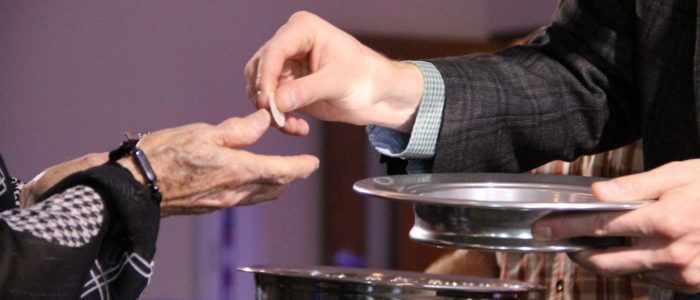
I think Calvin is largely correct here. The Protestant emphasis on the preaching of the Word is absolutely important to maintain. It is God’s Word, for example, that brings forth faith; it is God’s Word which instructs, guides, and corrects the church. So the proclamation of the Word, if it is not central, will result in a church that is not rightly ordered. The same can be said of the Sacraments—that is, the Eucharist and Baptism. The Eucharist, mysteriously, functions in the life of the church as a gracious benefit. It is a reminder of God’s goodness—one that is loving and confrontational all at the same time. Baptism, too, is inherently confrontational. It is an initiatory rite into a Kingdom that is opposed to this world’s powers. Like the proclamation of the Word, if the Sacraments are not properly placed within the life of the church, then our witness to the world will go impeded.

For pastors young and old, how would you encourage them to develop their pastoral theology? What resources or biblical passages would you direct them towards? What mistakes would you encourage them to avoid?

Every pastor needs to be a praying pastor. It’s essential. Prayer serves as a reminder that we are insufficient to bring about the Kingdom of God. I think one mistake pastors make is to treat their ministry as if everything depends on them. As a result of this mindset, pastors get emotionally discouraged and burned out. The truth, however, is that the success of the church depends on God, not us. All we are required to do is be faithful to do what he has given us to do, and he will take care of the results.

Again, I think the Psalms are super important for pastors. The main reason is because they will teach us to pray. I also think becoming familiar with the prophets, particularly Jeremiah, would be good for modern pastors. I have found the prophets to be encouraging friends and colleagues. In terms of other resources, I highly recommended Eugene Peterson’s works. His insights are gold.

Thank you again to Dr. Halsted! Look for more interviews with Matthew Halsted and others in the near future! If you missed my interview with Tawa Anderson on “Christian Apologetics” or my interview with Timothy and Faith Pawl on “Mary, the Mother of God”, you can view them here: Christian Apologetics and Mary, the Mother of God.