Aquinas on What the Psalms Are About

What do you know about the Psalms? They are poems, maybe prayers or songs. There are 150 of them in our Bibles. Many of them were written by King David. We hear them read at weddings, funerals, and Sunday worship services. We could go on and on. But what are the Psalms about?

With sixteen chapters, we can easily say that Mark is about Jesus, especially because 1:1 says as much (“The beginning of the gospel of Jesus Christ, the Son of God.”) With fifty chapters, we can say Genesis is the beginning: both the beginning of creation, the beginning of God’s special work to rescue fallen humanity, and even the beginning of the Hebrew Scriptures. With over 150 chapters, can we say that the book of Psalms has one thing that it’s about? Last Spring, I began to read Thomas Aquinas’s Commentary on the Psalms, and although I have much more to read, Thomas seems to think there is a unifying theme of the Psalms: all the works of God.

Thomas was a medieval theologian, and he is best known for his magnum opus the Summa Theologiae. The Summa is an expansive work intended to “treat of whatever belongs to the Christian religion.” Because of the Summa’s role in shaping modern Christian’s understanding of Thomas, many might be suprised to know that he wasn’t a “systematic theologian” vocationally, but instead he was employed as a “doctor of Scripture.” In other words, his primary job was to provide commentary on Scripture to university students. It was in this capacity that Thomas wrote his commentary on the Psalms, which does not sadly cover all 150 Psalms.

I benefited from reading Thomas’s prologue to his Commentary on the Psalms. (Although we have a habit of ignoring and skipping introductions in contemporary books, in all his works, Thomas’s introductions provide important information to understand his work.) In this introduction, he provides a compelling picture of the content and purpose of the Psalms as biblical canon.

The General Content of the Psalms

The Psalms contain mention of all the works of God. Thomas divides God’s works into four parts: creation, governance, restoration, and glorification. Of these four, most readers of the Psalms undersatnd creation and glorification, but it may be unclear what Thomas means by governance and restoration. By governance, he means that the Psalms communicate Old Testament history. He cites Psalm 78:2-3 (77:2-3 in his Bible) to that effect: “I will open my mouth in a parable; / I will utter dark sayings from of old, / things that we have heard and known, / that our fathers have told us.”

By restoration, Thomas refers to the Psalms that speak of Christ. This may be taken as a strange claim to the average reader of the Psalms. Defending contemporary worship music against the claim that it doesn’t use the name of Jesus, I once heard a pastor respond that the Psalms don’t either, and many contemporary worship songs are inspired by the Psalms. For my part, it’s 2025, and I’m happy to embrace the end of the worship wars. That being said, it’s common to think that the Psalms have little to do with Jesus. I will return to this point in the next section. With those four parts clarified, we understand that the Psalms have as their subject matter the works of God.

The Psalms provide beautiful, poetic words about our God that are often emotionally rich and varied. It is no wonder that so many godly men and women love the Psalms. It is also no wonder that copies of the New Testament intended to witness to the lost and begin on the path of folloing Jesus also often include the Psalms (usually along with the Proverbs).

In the Psalms, God’s work as Creator is explained and praised, perhaps most acutely in Psalm 8.

In the Psalms, the most important events of the Old Testament are repeated and explored, perhaps most comprehensively in Psalm 105 or 106.

In the Psalms, the restoration of God and man is revealed as Christ and his work are spoken of and praised. Our church preached through a series of Psalms that specifically looked at Christ foreshadowed in the Psalms. See this link: https://www.fbalcoa.org/sermons/series/the-messiah-in-the-psalms.

In the Psalms, God is glorified. This is why churches historically sang the Psalms in their services. This is a biblically-warranted practice, and although I don’t believe in exclusive Psalmody (only singing the Psalms), I would rather attend a church with exclusive Psalmody rather than a church that excludes the Psalms in its singing.

The Christological Content of the Psalms

Because the Psalms are inspired by God to provide words about his works, they provide an important role in revealing the one, true God to us. We might look at creation and think, “Surely this world must have been thought up and created by someone,” but the Psalms confirm this and explain it through the act of prayer and praise. Of all the works of God, Thomas thinks the Psalms play a particularly important role in revealing Christ to us.

Thomas writes about the Psalms, “For all the things that pertain to faith in the Incarnation are related so plainly in this work that it seems to be a Gospel rather than a prophecy.” Wow! This quote helps us understand that Thomas thought the Psalms provided a great deal of theological content for the doctrine of the Incarnation.

Whereas few Christians today think of the Psalms as a theological text or as about Jesus, Thomas views the Psalms as speaking clearly the doctrine of Christ. For him, Christ’s person and work are beautifully spoken of in the Psalms.

Is Thomas Right?

When I was a kid, I liked history. I still do. I think studying history and literature has value, but in theology, I want to learn what is true not just what someone else thought was true. On this issue, is Thomas right? Specifically, are the Psalms, at least some of them, about Christ? I suspect that Thomas is right. A plain, cursory reading of the Psalms may not reveal the deeply foundational Christology below, but the New Testament moves upon us to read deeper and with Christ as an interpretive key.

In Matthew 22:41-46, Jesus quotes Psalm 110:1 to make a theological point about his own identity. In Acts 2:34-35, Peter does the same thing to show how Jesus was greater than David. This text finds its way into other New Testament passages too.

In Acts 13:34-36, Paul quotes Psalm 2 and 16 in a sermon to speak about Jesus.

Many places in the New Testament quote or allude to the Psalms, but the book of Hebrews provides us with a masterclass in apostolic exegesis of the Psalms. In other words, Thomas agreed with the apostles that the Psalms contained teaching about Christ. The apostles, like Thomas, believed this to the degree that they interpreted who Jesus is and what he did in light of the Psalms.

Just mentioning those few quotes, really only scratches the surface, and more needs to be said. But I hope this brief introduction helps you see how the Psalms speak about our Lord and Savior Jesus Christ. May his named be glorified through all the earth!

The Problem of Evil with Tawa Anderson

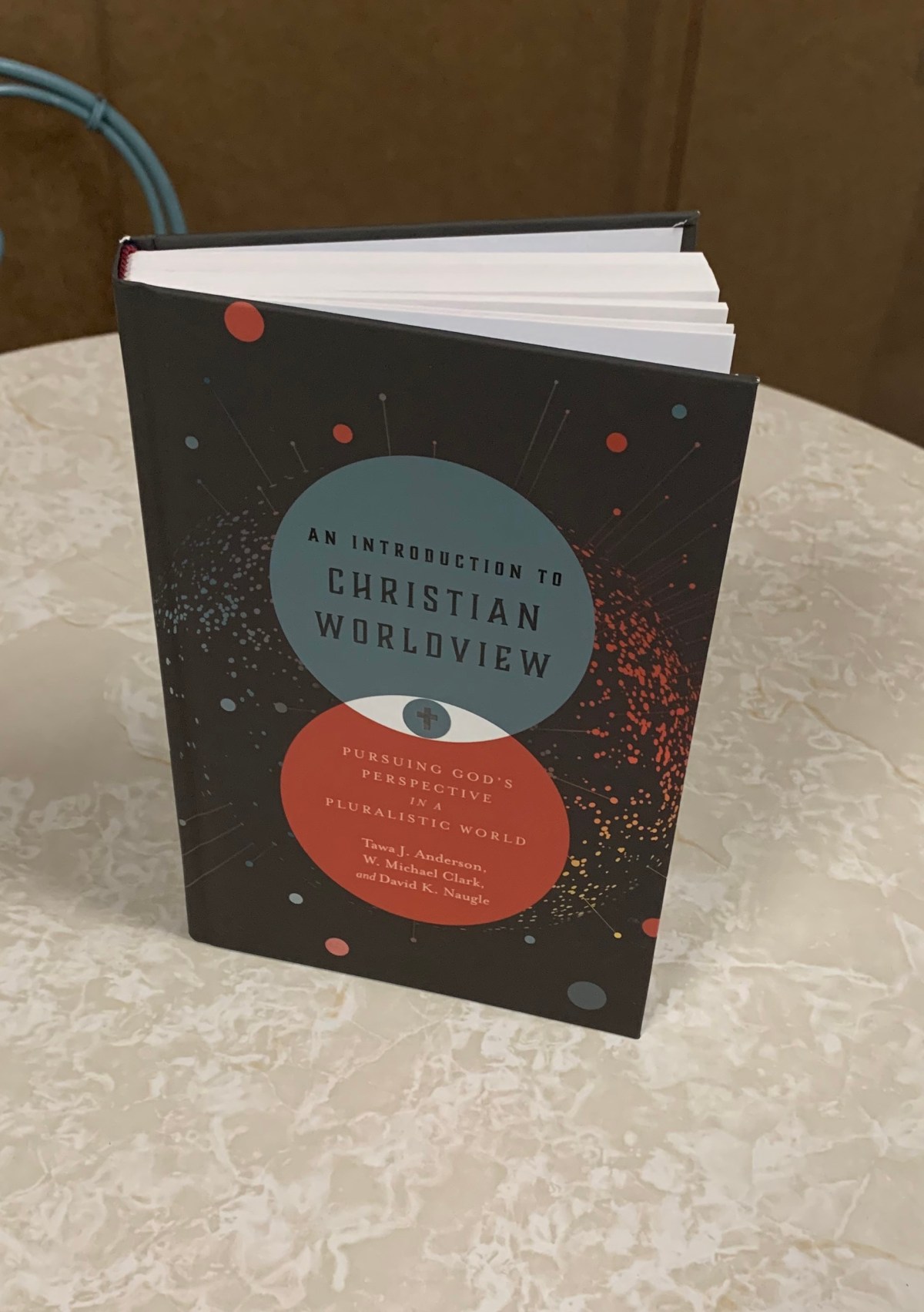
In this article, I interview Dr. Tawa Anderson about Christian apologetics. Anderson is an Associate Professor of Philosophy and Assistant Director of the Honors Program at Oklahoma Baptist University. He co-authored An Introduction to Christian Worldview: Pursuing God’s Perspective in a Pluralistic World which released in 2017. Anderson frequently speaks on issues concerning Christian apologetics, worldview, and philosophy for churches, seminaries, universities, and schools.

See my previous interview with Dr. Anderson on Christian Apologetics here.

Or, see my previous interview with Dr. Anderson on Christian Worldview here.

Thank you to Dr. Anderson for taking the time out of his schedule to answer these questions for us. My questions and comments appear in bold font, and his responses follow them.

What is the “problem of evil”? And what makes it a problem?

The ‘problem of evil’ as traditionally held is an argument against the existence of God based on the existence and/or prevalence of evil and suffering in the world.  In its classic form, as articulated by Epicurus, David Hume, or J. L. Mackie, the problem of evil suggests that if an all-powerful and all-good God exists, there should be no evil in the world.  Why?  Well, as the argument goes: (1) if God is omnipotent, he has the ability to prevent evil; (2) if he is all-loving he desires to prevent evil; and (3) if he is omniscient, he knows how to prevent evil.  If the God of Christianity exists, then, he wants to, knows how to, and has the ability to prevent evil.  Given the presence of evil, then, it would seem that God cannot exist.  It would seem, then, that evil presents a ‘problem’ for Christian belief!

I should note, however, that every worldview, not just Christianity, needs to account for the evil and suffering that exists in the world. There are two sides to the broad worldview problem of evil: first, defining and grounding evil; and second, explaining how evil fits coherently within the overarching worldview.

Many people consider the free will defense as a decisive victor against the logical problem of evil. Could you briefly outline the defense and explain why you do or don’t agree on its impact?

The freewill defense, as articulated by Alvin Plantinga, suggests (broadly) two things.  First, if God creates free-willed creatures (like human beings), then he cannot determine that they will use their freedom to always choose ‘good’ rather than ‘evil.’  After all, if God determined that they use their freedom only for good, then they would not be truly free at all.  Hence, even an omnipotent God cannot create free-willed creatures who only do good. 

Second, it is possible (I would argue likely) that God was committed to creating free-willed creatures who (a) would freely do more good than evil and (b) could know and worship him freely.  Hence, it could be that God created human beings with free will, knowing that we would use our free will to cause evil (even tremendous evil on occasion), but also know that it is better to have free-willed creatures who sometimes go wrong, than to have no free-willed creatures at all.

If this is the case, then God has a morally sufficient reason for creating free-willed creatures who cause evil.  Yes, God has the power/ability to prevent evil—but only by not creating free-willed human beings at all.  Yes, God has the prima facie desire to prevent evil—but that prima facie desire is overridden by his desire to create free-willed creatures who will frequently choose to love and serve him.

It is the consensus of contemporary philosophers that the free will defense has conclusively rebutted the logical problem of evil.  That is, there is no logical contradiction between the presence of evil in the world and the existence of God.  I tend to concur with this assessment—Plantinga and others have demonstrated the consistency of God’s existence with evil.

We should note, however, that the logical problem of evil is only one version of the problem of evil. Even if it is defanged, there are other aspects of evil in the world that can cause problems for the Christian faith.

Although the logical problem of evil may have appeared on the debate stage, it seems most people approach evil from a place of emotion. How should Christians engage people that see evil as a natural sign that God does not exist?

There are three versions of the problem of evil: logical, evidential, and existential.  We’ve already talked briefly about the logical problem of evil.  What you’re talking about here is what I call the existential (or experiential) problem of evil.  It seems to me that this is actually the dominant expression of the problem of evil. 

For most people, evil and suffering do not pose an abstract philosophical problem.  It’s not that they think about the attributes of God, and think about the existence of evil, and come to the rational conclusion that God and evil are inconsistent.  Rather, it seems to me that most people question the goodness or existence of God when they experience (or observe) significant evil and suffering in their lives (or in the lives of loved ones).  We encounter someone who hurts us terribly—through physical or psychological abuse, or abandonment, or betrayal.  We experience intense physical suffering—disease, sickness, injury.  We suffer exquisite emotional pain—the death of a beloved friend or family member.  And we wonder why, if God loves us, would God permit this to happen.  If God is all-powerful, surely he could have spared me from this evil and suffering.  So when we encounter evil and suffering personally, we are led to question God’s goodness, and perhaps even his very existence.

It is important to emphasize that people who encounter the existential problem of evil do not need philosophical answers to philosophical questions.  Instead, they need personal comfort and love.

In terms of engaging people who see evil as a sign that God does not exist, I suggest a couple of things.  First, remember that every worldview needs to account for the problem of evil.  Why is evil objectively evil?  And why does it exist?  It is fair to require Christianity to deal with the problem of evil; but it is also fair to require someone who uses evil as a reason to disbelieve in God to account for the reality and existence of evil.  So, for example, if someone uses evil as a reason to reject the existence of God and becomes an atheist; then we should ask them how an atheistic worldview can explain the objective reality of evil.

Second, Christians need to do a better job of presenting the full reality of a biblical worldview.  It is a tragedy that so many people in contemporary Western society believe that God is supposed to be like our personal genie—providing us with health, wealth, and happiness (sugar, spice, and everything nice).  But Scripture does not give us any reason to expect such a peaceful and pain-free life—at least, not on this side of death and resurrection.  A faithful biblical worldview will expect there to be pain and suffering in this life—we live in a world beset by the fall, in which humans perpetrate evil, and there is no reason to expect our lives to be exempt from the suffering.

How should local churches teach, preach, and counsel their people on issues of evil?

As mentioned above, churches need to teach the full breadth of the Christian worldview, particularly emphasizing the reality and impact of the Fall.  There is a desperate need to recapture the biblical notion of lament, and the biblical expectation of suffering in this life.

In addition, it would be helpful to be pro-active and pre-emptive in our preaching and teaching on evil and suffering. It seems to me that the contemporary church is frequently reactive: we preach and teach about evil after events like 9-11. Far better, it seems to me, that we preach and teach about evil six months before 9-11. We need to help prepare our congregations to face the evil and suffering that will inevitably come to them by presenting the fullness of the biblical teaching.

You’ve given an argument before for God’s existence from evil. Can you explain your motivation behind that argument and when you find it useful? Is there a time when it may not be the right approach?

In fairness, I consider the argument for God based on evil to be a purely intellectual exercise.  Here’s how it works (in short).

  1. ~(~PE) It is not the case that there is not a problem of evil. That is, there is a problem of evil.
  2. ~OEכ~PE If there is no objective evil, then there is no worldview problem of evil. If there is no objective evil, then worldviews need not explain, ground, or accommodate evil.
  3. ~(~OE) Combining 1 and 2 (via Modus Tollens), therefore it is not the case that there is no objective evil. That is, there is objective evil.
  4. ~OMVDכ~OE If there are no objective moral values and duties, then there is no objective evil. The understanding here is that objective evil requires an objective moral standard, such that acts (or intentions) that violate (or fall short of) the objective moral standard are objectively wrong (or evil).
  5. ~(~OMVD) Combining 3 and 4 (via Modus Tollens), therefore it is not the case that there are no objective moral values and duties. That is, there is such a thing as objective moral values and duties.
  6. ~Gכ~OMVD If there is no God, then there are no objective moral values and duties. This part of the argument is far too involved to defend briefly here; but simply put, it seems to me (and many other philosophers, theists and atheists alike) that the only way to ground the existence of objective moral values and duties is in the existence of a transcendent moral divine being (i.e., God). Hence, if there is no God, there are no objective moral values and duties.
  7. ~(~G) Combining 5 and 6 (via Modus Tollens), therefore it is not the case that God does not exist. That is, God exists. If you start with the ‘worldview problem of evil’ (Premise 1), or even if you start with the existence of objective evil (Premise 3), then you arrive at the conclusion: Therefore, God.

I find this approach to the question of evil and God most helpful with people who are abstractly raising evil as a reason to reject Christianity.  I think it is profoundly unhelpful in responding to the existential problem of evil, or in ministering to those who are hurting.  But it poses a robust challenge to those who want to maintain the reality of evil in the world while simultaneously avoiding God.

I also think this argument can be helpful in reinforcing the faith of believers, whether they are struggling in the presence of evil and suffering or just wavering in their faith.

Thank you again to Dr. Anderson! Look for my other interviews with Tawa Anderson here.

How Tom Wright Changed My Life

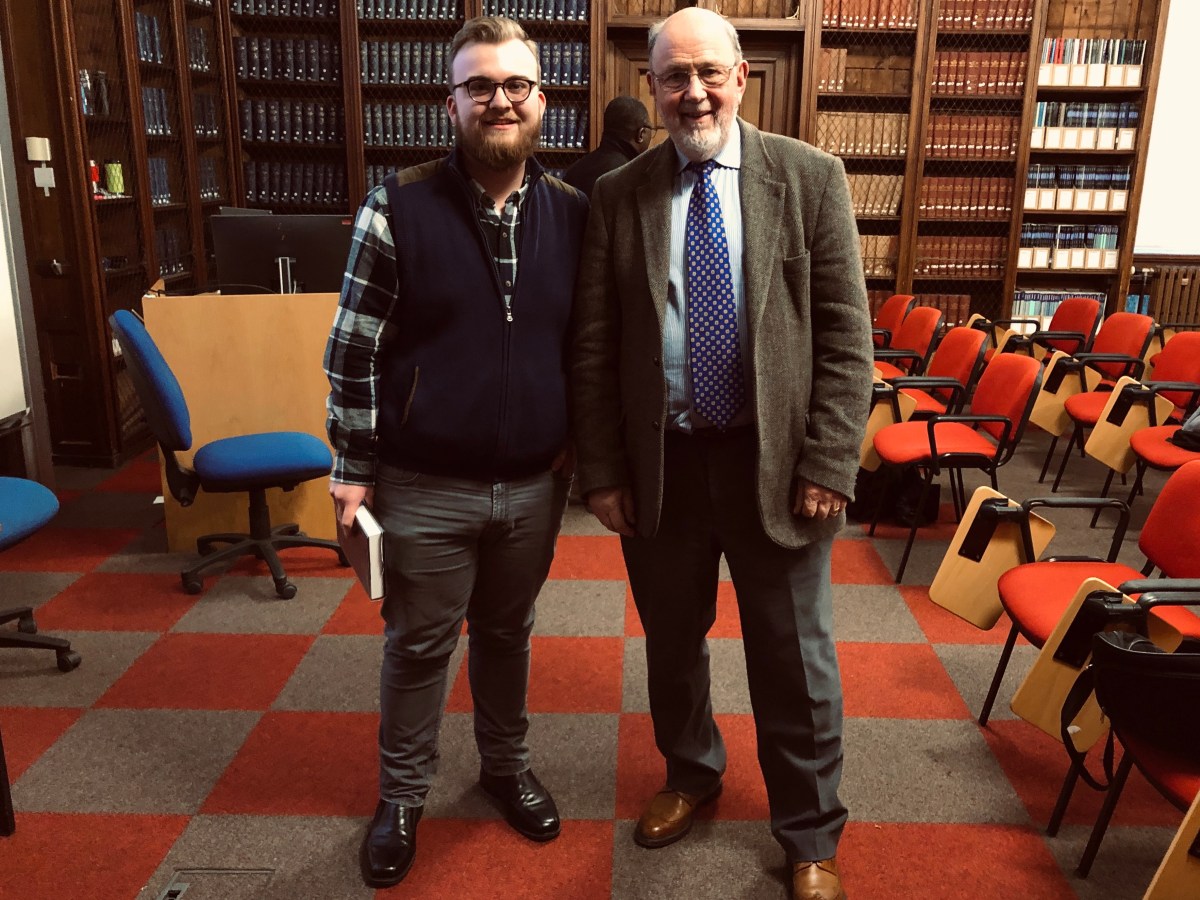
Yesterday (7 February 2020), St. Mary’s College of Divinity at St. Andrews had an event to honor and remember Tom Wright (a.k.a., N.T. Wright) for his tenure at the university. Professor Wright held a distinguished chair in New Testament for nearly a decade (a chair previously held by Richard Bauckham). As Professor Alan Torrance mentioned yesterday evening, he was responsible for millions of pounds being poured into St. Mary’s via student enrollment and grants. He was also instrumental in Logos (the program I study in) starting and being developed at St. Andrews. But I want to point out a few other ways that I have benefitted from his lifetime of scholarship.

When I was a high school student, I first heard the name N.T. Wright when my pastor and worship pastor wanted to take a group from the church to Oklahoma Christian University where he was speaking. The trip ended up being cancelled, and I didn’t get to go. (I would then meet him New Orleans some years later where he signed every book I had by him at the time, and then I would have classes with him some years after that.) Instead, I wouldn’t interact with Wright’s work for another couple years until I picked up the book Simply Christian and then Simply Jesus after that. Again, I wouldn’t interact with his work in any meaningful way until my undergraduate years.

The two primary things I learned from N.T. Wright which I should have known, but never did, were: the Jewishness of Jesus and the New Testament, and the Christian hope of future resurrection. I grew up in Christian communities that never spent much time thinking about how deeply Jewish Jesus was or the four gospel accounts which talk about him or Paul’s letters or any of it. Jesus is Jewish—not formerly or temporarily Jewish. Jesus continues to be Jewish, as does the New Testament. How are we to read the gospel accounts, Acts, Paul’s writings, the letter to the Hebrews, or the letters from Peter or John or Jude if not as profoundly Jewish texts? Yes, they often write to a wider audience—especially Paul’s letters, but they do so from a religious background and history of thought which is profoundly Jewish.

Finally, Tom Wright taught me the Christian hope. I always imagined death to be the end. I don’t mean that I thought we would just die and that there would be nothing. But I did imagine that we would die and go to heaven—some would go to hell—and that everything would just be disembodied and ethereal. However, in reading Wright’s works, I realized that the New Testament teaches something profoundly different. It teaches that God will raise us bodily from the dead in the end and bring heaven to earth. It teaches that if God doesn’t raise us like Jesus, then we ought to be the most pitied because we are wasting our lives. I can’t even recount the experience of reading The Resurrection of the Son of God for the first time. If I could get everyone to wade through its hundreds of pages, I would want every Christian to read it.

In summary, Tom Wright changed my life. His teaching impacted how my professors read the New Testament. In reading his work, I realized how profoundly he impacted my own professors. In reading his work, I realized essential truths of the Christian faith for the first time. In reading his work, I realized the Christian hope, and in reading his work, I realized that the story of Jesus is the climax of the story of Israel. I, like many, am forever indebted to the life and scholarship of N.T. Wright. May God bless him abundantly in his retirement (even if, it’s just “in name only”)!

Christian Worldview with Tawa Anderson

In this article, I interview Dr. Tawa Anderson about Christian worldview. Anderson is an Associate Professor of Philosophy and Assistant Director of the Honors Program at Oklahoma Baptist University. He co-authored An Introduction to Christian Worldview: Pursuing God’s Perspective in a Pluralistic World which released in 2017. Anderson frequently speaks on issues concerning Christian apologetics, worldview, and philosophy for churches, seminaries, universities, and schools.

See my previous interview with Dr. Anderson on Christian Apologetics here: Christian Apologetics.

Thank you to Dr. Anderson for taking the time out of his schedule to answer these questions for us. My questions and comments appear in bold font, and his responses follow them.

Two years ago, you and your co-authors published An Introduction to a Christian Worldview: Pursuing God’s Perspective in a Pluralistic World. Could you explain what “worldview” is? What a “Christian worldview” is? And why you chose that subtitle?

We define worldview as “the conceptual lens through we see and interpret the world and our place within it.” Worldview is like a set of glasses that we wear, through which we view and interact with reality. If we wear pink-colored glasses, the world looks pink (even if it’s not); if we wear the wrong-prescription lenses, the world will look very distorted. So having the right set of glasses is important—it helps us to see the world the way it really is.

The subtitle of our book was chosen as an indication that a Christian worldview is, ultimately, a pursuit of God’s perspective on reality. Christians recognize that God alone has a true and accurate understanding of life, the universe, and everything—our goal is to chase after God in relationship, but also in understanding. If God sees reality truly, then we want to see the world the way that God sees the world, so that we also might understand reality truly.

A Christian worldview, broadly put, is one which embraces the biblical contours of Creation – Fall – Redemption – Glorification, places the Triune God at the center of reality, and embraces Scripture as the inspired and authoritative self-revelation of God to His people.

If our worldviews are really so pervasive in how we interpret things, then how can we ever reach consensus? How could we ever get people to see things “our” way?

We talk about worldview impacting people in four ways: confirmation bias, experiential accommodation, the pool of live options, and life motivation. Confirmation bias describes our tendency to look for and accept information or arguments that agree with or support what we already believe. Experiential accommodation is the process of interpreting new data or experiences in a way that fits with our existing worldview. The pool of live options is the set of possible explanations that our worldview will permit. Life motivation describes the way that our worldview encourages us to behave and react.

With respect to those first three worldview influences, we can see how people with different worldviews will generally fail to reach consensus, and why it seems nearly impossible to get people to ‘see things our way’. Our very fundamental worldview means that we see the same data, but interpret that data in very different (perhaps even contradictory) ways. Within my Christian worldview, for example, the sudden remission of Aunt Martha’s cancer will readily be interpreted as an answer to concerted desperate prayer; but within my sister’s non-Christian worldview, such a miraculous interpretation of events is outside the pool of live options—there will have to be some other explanation.

With a plurality of competing worldviews, and the strong influence that worldview has upon us, how can we pursue consensus?

The first step, I think, is promoting worldview awareness—we need to be aware of the impact our worldview has upon us when interacting with other people. When are my worldview presuppositions causing me to dismiss someone’s position or arguments? Do I reject this piece of data for good reason, or simply because it doesn’t fit with my pre-existing understanding?

But, of course, it doesn’t help much if we are aware of our worldview influences but other people are not. Hence, it is important to try to educate people broadly about the existence and influence of worldview presuppositions—not in a way that challenges people to re-think their fundamental commitments, but rather asks them to become consciously aware of their worldview.

Why should Christians think through their own worldview and those of others?

We confess that Jesus is “the way, the truth, and the life,” (John 14:6), that Christ has come to “testify to the truth,” (John 18:37) and that “the truth will set you free” (John 8:32). So, it seems, truth has a central role in a Christian worldview. Hence, a Christian should be in constant pursuit of truth in his or her own worldview. Obtaining an increasingly true worldview will bring us closer to a full knowledge of God the Father, Son, and Holy Spirit.

The only way to obtain an increasingly true worldview is to subject our worldview to rigorous, conscious, and logical self-examination. We talk in our book about three “worldview truth-tests” that can help us adjudicate the accuracy of our worldview (and those of others): internal consistency (logical coherence), external consistency (evidential correspondence), and existential consistency (pragmatic satisfaction). Applying these tests to worldview components can help us apprehend truth more accurately.

How has studying Christian worldview changed your relationship to Jesus?

Probably the most fundamental impact has been my increasing awareness that I do not possess the full truth. I have always known this in some sense, but I have generally been overly confident (and dogmatic) about particular stances or beliefs that I hold. There are two sides to this.

First, many of those beliefs end up being secondary within a Christian worldview—not unimportant, but not central to the faith. In our textbook, we differentiate between “Core,” “Secondary,” and “Peripheral” worldview beliefs, and note that what identifies overarching worldviews (like Christianity, atheism, Islam, Buddhism) are Core beliefs. Worldview study has helped me to more clearly (I think) identify the core tenets of the Christian faith—those beliefs, attitudes, loves, and behaviors which are central, and without which there is not an authentic Christianity. Gary Habermas likes to crystallize core Christianity around the deity, atoning death, and bodily resurrection of Jesus of Nazareth. I think that’s helpful, but prefer to think of the ancient creeds (Apostles Creed, Nicene Creed) as fuller articulations of essential Christian doctrine. I have had a tendency to make secondary things ‘hills to die on,’ and I feel that as I grow in worldview awareness (and hopefully Christian maturity), I am less likely to make mountains out of molehills. For example, there was a time in my Christian life when I would have held that someone who embraces theistic evolution has left behind orthodox Christianity. Today, while I still reject the modern Darwinian synthesis (random mutation and natural selection as a sufficient explanation for the diversity of biological life), I recognize that someone can be an authentic orthodox Christian and embrace divinely-ordained evolution as the means of God’s creative activity. The issue of how and when God created are secondary; the doctrine that God created is primary (core).

Second, my growth in worldview awareness has helped me better identify the perspectival nature of human knowledge. Other people who are just as intelligent and well-meaning as I am come to radically different worldview conclusions. They, like me, are triply f’ed-up: we are all finite, fallen, and fallible. Hence, I cannot claim to have a monopoly on truth, and neither can they.

How has studying Christian worldview changed your relationship to those around you?

Four things to say here.

First, with respect to non-Christians who hold different worldviews, I think I have become more gracious. I am able to enter into their worldview, and understand why they might see the world the way that they do. This does not make me any more likely to believe that their fundamental worldview is true, but it does help me to understand who they are and why they stand where they do. In turn, this helps to build bridges between my worldview and theirs, such that I can (Lord willing) help them consider the winsomeness and truthfulness of the Christian worldview.

Second, with respect to non-Christians who claim that their worldview is obviously true and Christianity is obviously false, I think I have become more stringent. It pains me to see people who are so blinded to the possibility that they could be mistaken, and who seem to mock those who would embrace the ‘ridiculous superstitions’ of traditional religion.

Third, with respect to fellow Christians who think differently than I on secondary or peripheral issues, I have (again) become more gracious. I have a long ways to go here, and I know that in the past I have hurt fellow believers by arguing too vehemently about secondary issues. The biblical appeal for unity within the body of Christ requires that we accurately identify the core of Christianity, such that we fight for that, and never fight over the secondary issues. I’m getting there, but clearly am not there yet.

Fourth, with respect to people who profess Christianity but reject the historical core of the Christian worldview, I have become less patient. I would join the late Ronald Nash in appealing for ‘honesty in advertising’. If one is going to reject the objective existence of the Triune God, reject the inspiration and authority of God’s self-revelation in Scripture, reject the objective divinity of Jesus of Nazareth, reject the historical resurrection of Jesus on the third day, reject the notion of Christ’s death on the cross atoning for sin, and reject belief in life after death—then that person has no more right to call themselves a Christian than I have to call myself a black woman.

Thank you again to Dr. Anderson! Look for more interviews with Tawa Anderson and others in the near future! If you missed his interview on Christian Apologetics, you can view it here: Christian Apologetics.

Radical Forgiveness and Love

It was only a little over a day ago when I saw the video being shared from ABC News of Botham Jean’s brother forgiving his brother’s killer (Amber Guyger). If you’re unfamiliar with the story, I won’t try to retell it. You can look at the news article that I have linked below; as someone not trained in journalism, I would rather not accidentally include or exclude certain details. What I will say is this: it was a terrible incident that led to outrage in various communities.

However, I don’t want to comment on the legal, moral, or racial issues surrounding this story. I want to focus on that video I mentioned before. In that video, a brave young man shared his heart and soul in front of a courtroom of grieving people including his own family and to an international audience. Looking on his brother’s killer, Brandt Jean admitted that he didn’t want Guyger to go to jail. He wants what’s best for, and he forgives her and loves her. He wants the same thing for her that he says his brother Botham would have wanted; he wants her to accept Christ. After repeating this, he leaves the stand to hug Guyger with audible tears being shed throughout the courtroom.

If you watch that video, you will see what I can only describe as radical forgiveness and love. That cannot have been easy for him. I cannot imagine being in his place and being able to say those words. I can hardly watch it without tearing up. Looking at comments on social media, it becomes clear that some people think that she doesn’t deserve it. Many people think that he shouldn’t have done this. But I don’t think for a second they’ll change his mind. When someone does something so astounding, it’s hard for the world to understand. When someone shows love and forgiveness to the least deserving person in their life, the world may call them crazy or misguided, but God calls them blessed. Blessed are those who mourn, for they shall be comforted. Blessed are the merciful, for they shall receive mercy. Blessed are the peacemakers, for they shall be called sons of God.

This act was a fulfillment of the ministry done for us and given to us by God: the ministry of reconciliation. Paul writes:

So from now on we regard no one from a worldly point of view. Though we once regarded Christ in this way, we do so no longer. Therefore, if anyone is in Christ, the new creation has come: The old has gone, the new is here! All this is from God, who reconciled us to himself through Christ and gave us the ministry of reconciliation: that God was reconciling the world to himself in Christ, not counting people’s sins against them. And he has committed to us the message of reconciliation. We are therefore Christ’s ambassadors, as though God were making his appeal through us. We implore you on Christ’s behalf: Be reconciled to God. God made him who had no sin to be sin for us, so that in him we might become the righteousness of God (2 Corinthians 5:16-21; emphasis mine).

I honestly cannot get that young man’s act of love out of my head. It convicts me. Could I do the same? It confuses me. Is this really what love is? It calls me. Go and do likewise. I cannot watch that video and not see Jesus. Following in his footsteps, the judge went to Guyger before she was taken away after her sentencing. She went to her and gave her, what was reported to be, her personal Bible. She read her John 3:16, and she told her to start by reading the gospel according to John. She told her that God loves her and has a plan for her. She, like Botham Jean’s brother, embraced her. What another beautiful act of Jesus-love. We cannot forget that radical forgiveness and love are the means by which God’s kingdom will come on earth as it is in heaven.

For the news story, http://abcn.ws/2puWKDl.